Diamond crystals
 |
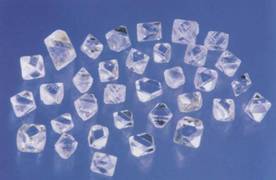 Rough diamonds |
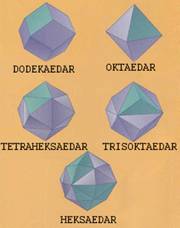
All minerals fit into seven crystal systems. The crystal systems are cubic or isometric, tetragonal, hexagonal, trigonal or rhombohedral, orthorhombic, monoclinic and triclinic.
During the formation process, diamond can also incorporate small crystals of other minerals - even other diamonds. You usually need magnification to see the inclusions, but you can sometimes see them with your unaided eye.
In the gem-quality category, the shape of a rough diamond crystal is the most important factor in its potential value as a gemstone. The shape affects the amount of weight the cutter can retain in the finished gem.
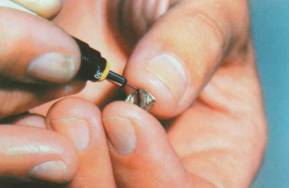 To prepare diamond rough for cutting, an expert must analyse its structure carefully and mark it for sawing or cleaving. The dodecahedral, cubic and octahedral planes are the most important directions from a diamond cutter’s point of view because some planes are best for sawing or polishing and others for cleaving. Directional hardness is particularly important in diamond cutting and since there is no natural material harder than diamond, cutters have to take advantage of diamond’s softer directions.
The planner – also called the marker – decides where to mark the rough for cutting to produce the largest possible gem with the best quality and proportions. Planners use their knowledge about diamond’s crystal structure and inclusions, which also helps to determine which cutting technique to use. The introduction of the rotary diamond saw around 20th century had a huge impact on diamond cutting. Laser sawing was first introduced in the late 20th century, which is faster and much more versatile. Laser sawing allows planners more freedom to mark rough based on considerations like size, shape and clarity.
Gemstone value is based on a combination of features, sometimes called value factors. These values are known as the Four Cs: